The solar battery installation cost can vary quite a bit from one home to another. Battery size, the brand and inverter you choose, the complexity of the installation, and available incentives can all affect the final price. Knowing what goes into the cost makes it easier to understand your quote and avoid paying more than you need to.
What Am I Actually Paying For?
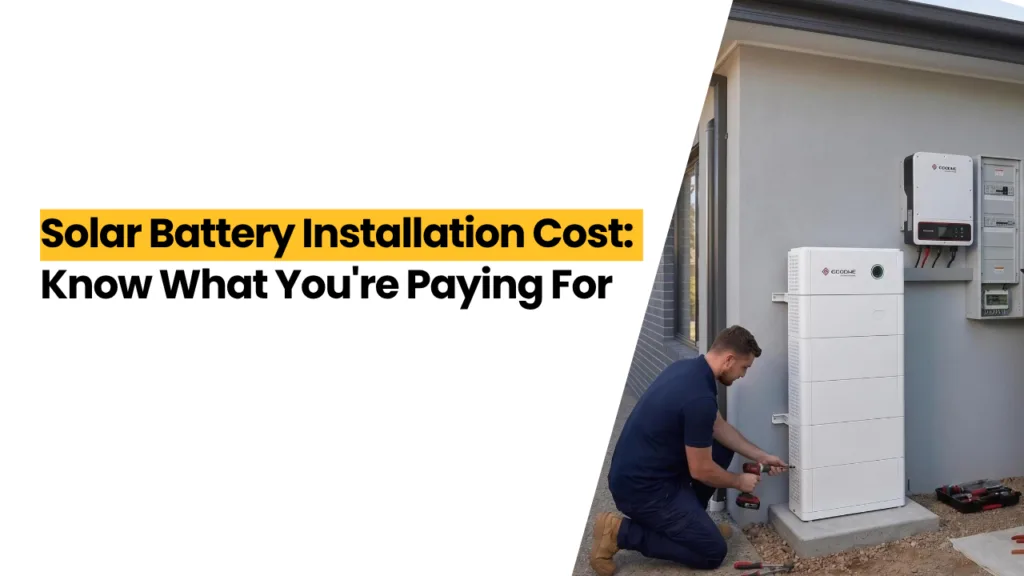
You’re paying for far more than a battery in a box. A proper quote covers the unit, the inverter, electrical work, labour, and the paperwork that gets everything legally switched on.
Residential solar battery installation is a bundle, and your solar battery is only one line on the invoice. These are the pieces to look for:
- Battery unit: the storage itself, priced by usable capacity and brand.
- Inverter: converts power between your panels, battery, and home, and may need adding or replacing.
- Electrical work: cabling, isolators, protective gear and any changes to the switchboard.
- Labour: licensed electricians, plus the time to mount the unit safely.
- Paperwork: approvals, grid notification and commissioning tests.
Ask for each of these listed separately. If a quote rolls everything into one number, the solar battery installation cost is hiding somewhere you can’t see it.
Why Do Two Quotes Look So Different?
Because the jobs usually aren’t identical. Capacity, equipment quality, and what your home already has all shift the price, so two similar-looking quotes can hide very different systems underneath.
Does Capacity Matter Most?
Usually, yes. A larger battery stores more and costs more, but a bigger one only pays off if you’ll actually fill it. Size it to your evenings, not to the brochure.
Installing solar battery capacity you never use is like hiring a removalist truck to move a single chair.
Does My Existing System Change Things?
Yes. If your current inverter is hybrid-ready, adding storage is fairly straightforward. If it isn’t, you may need a new inverter or a separate battery inverter, which pushes the price up.
Is It Cheaper to Add a Battery With New Panels?
Installing solar panels and a battery together can reduce duplicated labour, equipment and electrical work, but it isn’t automatically cheaper in every situation.
Planning both systems from the start can allow the wiring, inverter, and switchboard requirements to be designed together rather than modified later. However, adding solar batteries to an existing system can also make sense when your energy use changes, or you want more control over your solar power.
How Do the Main Setups Compare?
New systems are usually the simplest, hybrid-ready retrofits sit in the middle, and older systems that need inverter changes are the most involved. The table below shows how they stack up.
| Setup | Best for | Install complexity | Relative cost |
| New panels and battery together | Starting from scratch | Low | Mid |
| Battery added to hybrid-ready system | Existing solar owners | Low to medium | Mid |
| Battery added to an older system | Older panels, string inverter | Medium to high | Higher |
| Battery with blackout backup | Outage-prone areas | Medium to high | Higher |
| Smaller battery for evening use | Modest bills | Low | Lower |
Notice that the cheapest row isn’t always the one that suits your house. A solar and battery combo planned around how you live beats a bargain that never quite fits.
How Common Is Adding Storage Now?
Very common, and growing. Since federal support arrived, battery uptake has jumped across Australian suburbs, so installers and neighbours to ask are easy to find.
The federal Cheaper Home Batteries Program has seen rapid uptake across Australia. By August 2026, more than 500,000 batteries had been installed under the program, with more than three-quarters of those installations occurring in outer suburban and regional communities, according to Australian Manufacturing’s report on the government figures.
Residential solar battery installation has gone from curiosity to mainstream upgrade. That’s good news: more competition, more reviews, and a solar battery stops feeling like a gamble once a neighbour has one.
What Surprise Costs Can Pop Up?
The usual suspects are switchboard upgrades, longer cable runs, access gear, and extra safety work around the unit. None is huge alone, but they add up fast if nobody mentions them before you sign.
- Switchboard: older boards may need upgrading before anything can connect.
- Cable runs: the further the battery sits from your inverter, the more cable and labour.
- Location rules: batteries need safe clearances, which can limit where they go and add work.
- Backup circuit: keeping the fridge and lights alive in a blackout needs extra wiring.
Even installing solar battery units in a tight garage or beside a window can trigger additional work, depending on where the solar battery ends up. That’s why a site visit matters. A poorly planned installation can lead to unexpected costs. A site inspection helps identify electrical upgrades, cable routes and safety requirements before work begins.
Can Incentives Shrink the Bill?
Eligible battery systems may qualify for support through the Australian Government’s Cheaper Home Batteries Program. The discount depends on the applicable scheme rules, eligible battery capacity, product requirements and installation conditions. Check the current official guidance to confirm eligibility and the estimated discount before signing a quote.
Eligibility, installer accreditation and product requirements apply, so confirm the current discount before signing a quote.
When Does a Battery Pay Itself Back?
A battery’s payback period depends on its upfront cost, electricity tariffs, solar exports and how much stored energy your household uses. Compare the expected annual savings with the installed cost to estimate whether a battery is financially worthwhile for your home.
Plenty of owners also count benefits that never reach a spreadsheet: blackout cover, less grid reliance, and running the house off your own roof. A good solar and battery plan weighs both sides, so judge the solar battery installation cost against lifetime value, not just signing day.
What Does the Installation Process Look Like?
Check your bill, confirm your existing system, collect written quotes, verify credentials, and sign only when every line is clear. Following that order keeps the process calm and the price fair.
- Read your bill. Find your evening usage and peak rates so you know how much storage you really need.
- Check your system. Note your inverter model and age, because it decides whether you can install home battery equipment easily or need extra gear.
- Gather three quotes. Ask every installer to itemise equipment, labour, extras, and warranty, and to confirm the full solar battery installation cost in writing.
- Verify credentials. Check licences, accreditation, and how many jobs like yours they’ve finished. Experience in installing solar battery systems shows up in the details.
- Book the site visit. Any solar installation in home worth trusting starts with someone actually looking at your switchboard, wall space, and cable route.
- Plan the day. Confirm timing, power shutdown windows, and who will install solar batteries and handle commissioning.
FAQs
How long does a solar installation in home with a battery take?
Installation time depends on the battery system, existing solar equipment, switchboard, cable runs, and whether backup circuits are included. A straightforward battery installation may be completed within a day, while more complex solar and battery installations can take longer.
Do I need panels before I install solar batteries?
You don’t necessarily need to install new panels at the same time as a battery, because eligible batteries can be added to an existing solar PV system. However, the current Cheaper Home Batteries Program requires the battery to be connected to new or existing solar PV, so a battery installed solely to store electricity from the grid does not qualify for the program.
Does a solar battery work during a blackout?
Only if it was set up with backup capability. Many systems shut down with the grid for safety, so tell your installer upfront if outage protection matters.
How long do home batteries last?
Most carry warranties of around ten years, and many keep working beyond that with gradually reduced capacity. Read the warranty’s capacity guarantee, as it tells you what to expect later on.
Can I fit a battery myself?
No. Batteries involve high-voltage wiring and strict safety rules, so the work must be done by licensed professionals. A DIY job can void warranties, break regulations, and put your household at risk.
What Happens to Your Solar Power After Sunset?
Your panels do their best work while the sun is up, but your household doesn’t stop using electricity at night. A solar battery can store that daytime energy and make it available when you need it most. MJM Solar can assess your Perth home and help you find out if battery storage makes sense for your energy use.
Request your quote today and get a clear breakdown of your solar battery installation cost, without the guesswork.