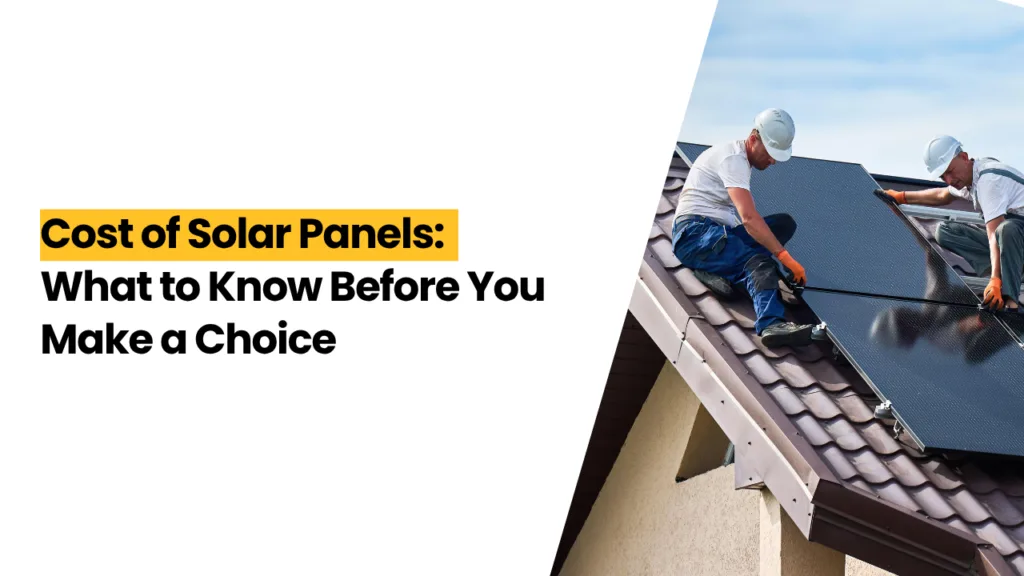
The cost of solar panels for a home in Australia depends mainly on system size, equipment, roof complexity, installation requirements, and available incentives. Smaller systems generally cost less upfront, while larger systems cost more but can provide more electricity for homes with higher energy use. The final price should be based on a written quote that clearly shows the system size, equipment, installation, and any applicable discounts.
How Much Does a Solar System Cost in Australia?
It depends on the home. Most people buy a complete system rather than loose panels, and the total grows with the kilowatts you install. Your own written quote is the only number that really counts for your roof.
Before comparing prices, check your electricity bills to understand how much energy your household uses. Your electricity consumption helps determine the system size you need, and the system size is one of the biggest factors affecting the final price. This gives you a more useful starting point than comparing generic solar prices alone.
What Does the Cost of Installing Solar Panels Cover?
It covers far more than panels on a roof. Your quote should bundle the inverter, mounting frame, wiring, labour, permits, and grid paperwork into one package, with each item named so you can see where the money goes.
- Panels: The part everyone pictures, and often not the biggest line on the quote.
- Inverter: Turns the panels’ output into power your home can use, and its type affects both price and performance.
- Mounting: Rails and brackets must suit your roof material, so tile, metal and flat roofs are all priced differently.
- Labour: The time of electricians and roofers, plus safety gear like scaffolding on taller homes.
- Paperwork: Approvals, inspections, grid-connection requirements and other compliance work that may be required before the system can operate.
When you compare the cost of installing solar panels across companies, make sure each one lists these items the same way. A quote that skips one isn’t cheaper; it’s just unfinished.
What Makes One Quote Higher Than Another?
Equipment grade, roof layout, shade, your home’s wiring, and your location are the main drivers. Two similar-looking systems can land far apart once these differ, so ask every installer to explain what sits behind their number.
- Equipment: Higher-quality panels, inverters and other components can increase the upfront price, while differences in efficiency, warranty terms, monitoring and system design can affect long-term value.
- Roof: Steep pitches, second storeys and fragile tiles slow a crew down, and slower crews cost more.
- Shade: A big tree or chimney may call for extra optimisers or a different layout.
- Wiring: An ageing switchboard sometimes needs an upgrade before anything goes live.
- Location: Labour costs, roof conditions, local regulations and state or territory incentives can affect what you pay for solar in different parts of Australia.
None of this means a higher quote is a worse one. The cost of solar panels simply reflects choices, and your job is to know which choices you’re paying for.
Which System Size Fits My Home?
Match the system to your electricity use, roof space, and future energy needs rather than simply choosing the largest system available. A larger system may suit households with high daytime consumption, electric vehicles, pool equipment, or plans to add a battery, while a smaller system may be enough for homes with lower electricity demand.
Household size can influence how much solar you need, but electricity consumption is a better guide than the number of people in the home. The table below shows how system size and relative cost can change with household energy needs, using broad bands rather than fixed prices.
| Household type | Typical system direction | Energy demand | Relative upfront cost |
| Single or couple with low electricity use | Smaller system | Lower | Lower |
| Family of three to four | Medium system | Moderate | Mid-range |
| Larger home with pool or air conditioning | Larger system | Higher | Higher |
| Home with an electric vehicle | Medium to larger system | Higher, especially with charging | Mid to higher |
| Home planning a battery | Depends on usage and battery goals | Varies | Varies |
Larger systems can sometimes have a lower cost per watt because fixed costs such as site assessment, design, and installation preparation are spread across more solar capacity. However, the final cost per watt still depends on the equipment, roof, installation requirements, and installer.
How Have Solar Installation Costs Changed Over Time?
Solar technology costs have declined significantly over the long term. According to the International Renewable Energy Agency (IRENA), the global weighted-average levelised cost of electricity (LCOE) from newly commissioned utility-scale solar PV fell by 90% between 2010 and 2023. However, this reflects the cost of generating electricity from large-scale solar projects, not the price homeowners pay for residential solar installation in Australia.
For Australian homeowners, installation costs depend on system size, equipment, labour, roof conditions and available government incentives. Comparing current quotes for complete solar systems is the best way to understand the price you may pay.
How Much Do Solar Panels Cost Individually?
A single panel is one of the cheaper items in the project, but it’s rarely sold alone. Most of the spend goes into the inverter, labour, and compliance work around it.
The price of an individual solar panel depends on its wattage, brand, efficiency and warranty. However, homeowners should compare complete installation quotes because equipment, labour and electrical work also contribute to the total cost.
Any cost of solar panel figure without the inverter and labour beside it is only half a story. Likewise, a quote that buries the cost of solar panel hardware inside one lump sum deserves a polite question or two.
Is a Cheap Quote Worth Taking?
Sometimes, but cheap deserves a closer look. Rock-bottom pricing can signal thin warranties, budget components, or little aftercare, and a system you regret will always cost more than one you chose carefully.
Think of it like buying boots for a long hike. You wouldn’t grab the cheapest pair without checking the stitching. When solar panels cost noticeably less from one company, ask what was trimmed: panel tier, inverter brand, warranty length, or support after the install.
And stretch your thinking beyond today. When comparing solar systems, consider the upfront installation cost, potential maintenance, possible inverter replacement and expected electricity bill savings over the system’s lifetime. Actual savings depend on system performance and household energy use.
How Do You Work Out the Real Solar Cost?
The number on a solar quote is only the starting point. To understand what you’ll really pay, break the price down, account for incentives, and check what you’re getting for the money.
- Start with the system size. A 6.6 kW system and a 10 kW system can have very different prices, so make sure you’re comparing similar systems.
- Separate equipment costs. Look at the panels, inverter, mounting hardware, and other components rather than treating the system as one lump sum.
- Check installation costs. Roof access, electrical work, scaffolding, and switchboard upgrades can add to the final bill.
- Apply available incentives. Check the rebates or certificates you qualify for and make sure the advertised price clearly shows whether they have already been deducted.
- Consider long-term value. A slightly higher upfront cost may be worthwhile if it comes with better equipment, longer warranties, or stronger after-sales support.
- Calculate the final figure. Add the included costs, subtract applicable incentives, and check for anything that could appear as an extra charge later.
Once you break the price down this way, the cost of solar panels becomes much easier to understand and much harder to misjudge.
FAQs
Will prices fall further for homeowners?
Future solar installation prices depend on equipment costs, labour, installer pricing and government incentives. Rather than assuming prices will fall, compare current quotes and consider the potential savings from installing a suitable system.
How much do solar panels cost for a small home?
Smaller homes need smaller systems, so the total sits toward the lower end. Fixed items like site visits and paperwork still apply, though, so a half-sized system rarely costs half as much. Get it in writing.
Does location change what solar panels cost?
Yes. Labour rates, local incentives, climate and roof styles vary by region, so identical systems can be priced differently across towns. A local installer will know what’s typical near you.
Can I buy panels alone?
It’s rarely worthwhile. Inverters, wiring, labour, and paperwork make up most of the job, so the cost of a solar panel is only a slice of the total. Many incentives also require an accredited installer.
Does the cost of installing solar panels include maintenance?
Usually not. Installation covers setting up the system, while cleaning and inspections are separate, although solar needs very little upkeep. Check what your warranty covers and ask about optional service plans.
What If Your Roof Could Do More?
Your roof is already taking the heat, the rain, and the full Australian sun. Why not put some of that sunlight to work? MJM Solar can look at your home, your energy habits, and the space above you to work out what a practical solar setup could look like and what it would cost.
No need to guess from a generic price range or wonder whether your roof is suitable. Request your quote today and get a clearer picture of what your home could generate, save, and get from going solar.