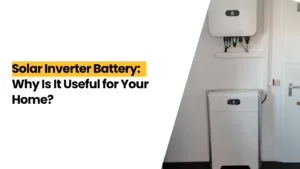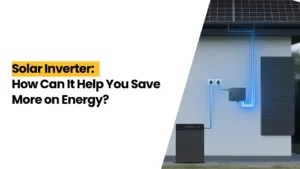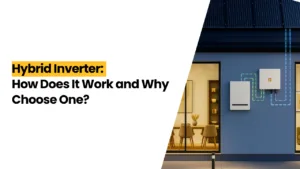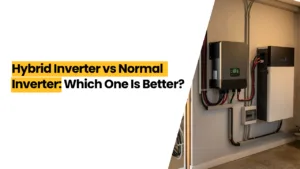
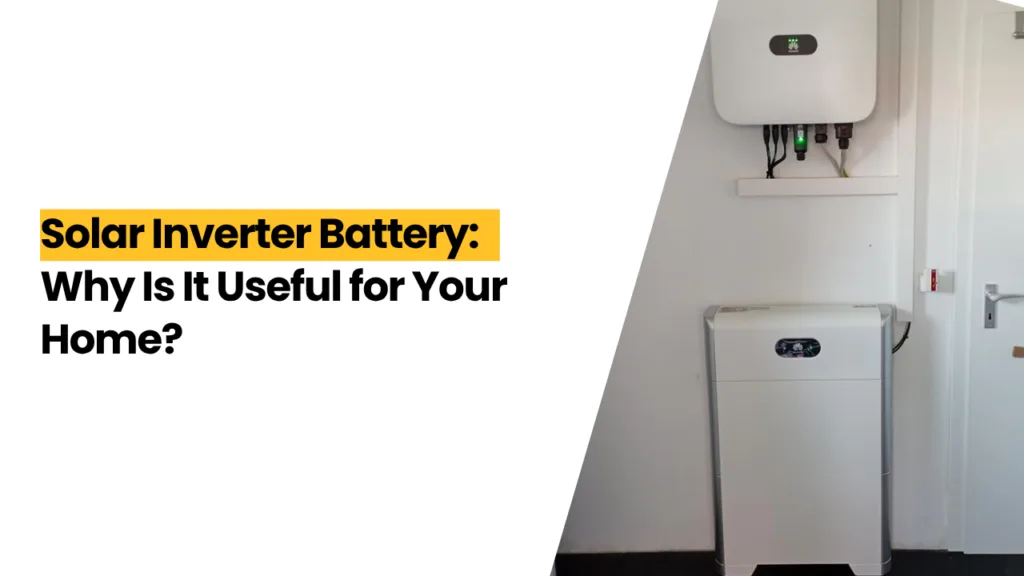
A solar inverter battery stores extra electricity produced by solar panels so your home can use it later, especially after sunset or during a power interruption. It works with the inverter to convert and manage stored energy, helping households use more of their own solar power and reduce dependence on grid electricity.
How does a solar inverter battery work?
A solar inverter battery stores surplus solar electricity when your panels generate more power than your home needs. The inverter manages the energy flow and converts stored DC electricity into usable AC power when appliances need it.
During sunny hours, your solar panels normally supply the home first. If production exceeds immediate demand, the extra energy can charge the battery. Later, when solar generation drops, stored power can be sent back through the inverter.
This makes storage useful beyond emergencies. Instead of allowing unused daytime generation to go elsewhere, you can shift some of that electricity toward evening and night-time consumption.
Why add a battery to home solar?
The biggest advantage is simple: you can save excess solar energy for a time when your panels are no longer producing. A home battery system gives daytime solar generation a second chance to serve your home later.
This can be particularly useful for households with higher evening consumption. Lights, televisions, cooling, kitchen appliances, and other equipment may continue running well after the sun has gone down.
Battery storage can also provide backup support. Depending on the equipment and installation, an inverter with battery can keep selected circuits operating during an outage. It does not automatically mean every appliance will continue working.
What benefits can homeowners expect?
A properly sized storage system can change when you use solar electricity rather than simply increasing how much your panels generate.
- Energy shifting: Save daytime solar and use it later.
- Backup support: Keep selected essential circuits available during suitable outages.
- Higher self-use: Put surplus solar generation toward your own household demand.
- Better visibility: Monitor generation, consumption, charging, and discharge through compatible software.
The useful part is the match between equipment and lifestyle. A very large battery is not automatically a smarter purchase. The battery should be selected based on actual energy use, available solar generation, and the amount of backup you need.
How large should your battery be?
There is no universal battery size for every home. The right capacity depends on daily electricity consumption, evening demand, solar production, backup expectations, and how much surplus energy your panels normally create.
| Household pattern | Storage priority | Main consideration |
| Mostly daytime use | Lower storage | Available solar surplus |
| Heavy evening use | Medium storage | Night-time electricity demand |
| Frequent outages | Backup-focused | Essential circuits |
| High electricity use | Larger capacity | Peak loads and daily consumption |
The battery should also match the inverter’s voltage range, chemistry requirements, communication system, and operating limits. Capacity alone does not determine whether a system will perform properly.
Which battery technology makes sense?
Lithium-based batteries are widely used for residential storage because they offer good energy density, long cycle life, and efficient operation. LFP batteries are particularly common in stationary applications because they balance durability, cost, and safety.
Lead-acid batteries remain available for some applications, although they can require more space and have different maintenance and usable-capacity characteristics.
When comparing a battery inverter, look beyond the headline capacity. Check usable energy, efficiency, warranty coverage, cycle expectations, temperature requirements, and backup capability before making a decision.
What does battery storage mean for homeowners?
Home battery adoption is growing as more households look for ways to use solar power beyond daylight hours. The Clean Energy Council reported that close to 75,000 home battery units were sold in Australia during 2024, compared with 46,127 in 2023.
The rise shows why storage is becoming a practical part of residential solar. For homeowners, a battery can hold surplus daytime electricity and make it available later, helping the solar system provide useful power even after the sun goes down.
How do battery and inverter work together?
The battery stores electricity as DC, while most household appliances use AC. The inverter manages the conversion and controls how electricity moves between the solar panels, battery, home, and grid.
That is why battery and inverter compatibility matters. Two high-quality products may still perform poorly together if their voltage ranges, communication systems, or operating requirements do not match.
A modern battery storage system can also provide energy monitoring. Homeowners may be able to see when solar power is being generated, when storage is charging, and when the battery is supplying the house.
When is battery storage most useful?
Storage generally makes more sense when a household produces useful solar energy during the day but consumes a significant amount of electricity later. It can also be valuable when backup power is a major priority.
However, installing battery storage is not automatically worthwhile for every property. The purchase price, electricity tariffs, solar output, battery lifespan, and household consumption all influence the financial result.
The better question is not simply, “Can I install storage?” It is, “What problem do I want the storage to solve?” That answer should guide the system design.
How should you plan your system?
- Review electricity use: Examine recent bills and identify how much electricity your home consumes after sunset.
- Check solar production: Determine how much daytime generation remains after your household uses its immediate solar power.
- Choose essential loads: Decide which appliances or circuits should receive backup electricity during an outage.
- Compare storage options: Look at usable capacity, chemistry, efficiency, warranty, and expected lifespan.
- Confirm equipment compatibility: Make sure the solar panels, battery inverter, battery, and monitoring equipment can operate together.
- Calculate the value: Compare installation costs with potential savings, self-consumption, and backup benefits.
- Arrange professional installation: Have the complete system assessed and installed according to electrical and manufacturer requirements.
What should you check before buying?
Start with your household rather than the product catalogue. A system should reflect how your family actually consumes electricity instead of simply offering the largest capacity available.
Pay close attention to warranty conditions, guaranteed capacity, efficiency, monitoring, degradation, and expected service life. These details can tell you more about long-term value than the battery’s advertised size.
Also ask exactly what happens during a power outage. Some systems can supply selected circuits, while others need additional backup equipment. Knowing this before installation prevents unrealistic expectations.
FAQs
Can a battery work without solar panels?
Some battery systems can charge from the grid, depending on their configuration and local requirements. When paired with solar, however, they can store surplus daytime generation for later household use.
Will storage run my entire house during an outage?
Not always. Backup depends on battery capacity, inverter capability, electrical design, and which household circuits are connected to the backup supply.
How long can a home battery last?
Lifespan depends on chemistry, usage, temperature, charging patterns, and manufacturer specifications. Warranty length and guaranteed remaining capacity are useful comparison points.
Can a Solar Battery System Work During a Power Outage?
Yes. A battery-backed solar system can provide backup electricity during an outage when it is designed for backup operation. Its capacity and inverter capability determine which appliances can continue running and for how long.
How Do I Choose the Right Battery for My Solar System?
Choose a battery based on your home’s energy consumption, required backup time, solar output, usable capacity, and compatibility with the inverter. Professional sizing can help avoid paying for storage you may not actually need.
Can storage lower electricity bills?
It can reduce grid purchases by allowing stored solar energy to cover later demand. Actual savings depend on electricity rates, household usage, solar production, and system design.
Could your solar system do more after sunset?
A solar inverter battery should not be added simply because it is the latest solar accessory. The real value comes from matching storage with the way your home produces and consumes electricity.
If you are considering an inverter with battery, MJM Solar can help assess your energy needs and explore a practical storage solution designed around your home.