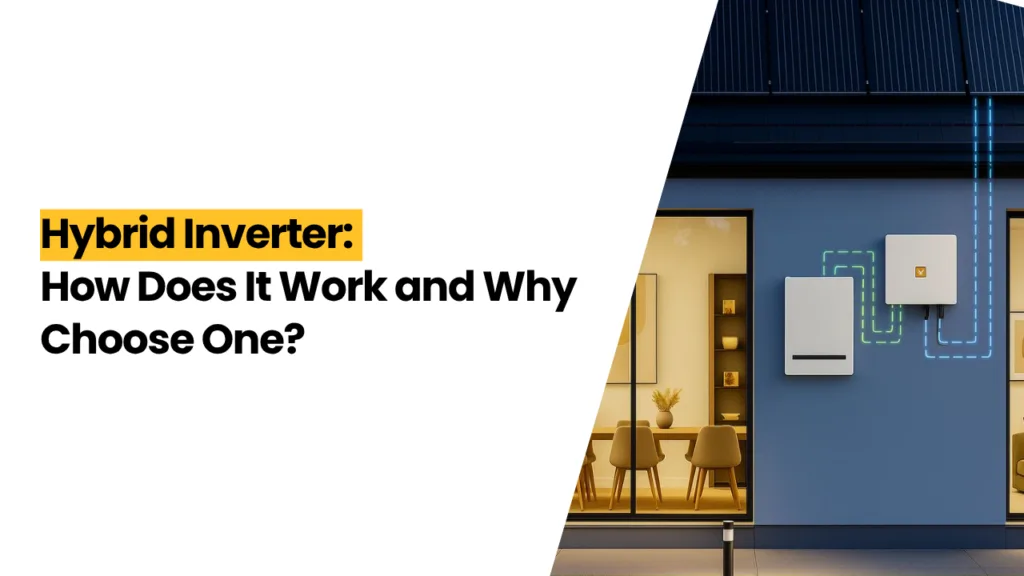
A hybrid inverter manages electricity from solar panels, batteries, and the grid through one coordinated system. It converts solar power into usable electricity, manages battery charging and discharging, and can coordinate available energy sources based on system settings and demand. That makes it a smart option for homes that want better control over energy use, storage, and backup power.
What is a hybrid inverter?
A hybrid inverter connects solar panels, batteries, household appliances, and the utility grid within one energy system. Instead of handling each source separately, it coordinates them according to electricity production, household demand, battery charge, and grid availability.
That coordination is what makes a hybrid inverter different from a basic solar inverter. It does more than convert electricity; it helps decide where that electricity should go at different times.
How Does a Hybrid Inverter System Work?
During sunny hours, the panels produce DC electricity. The inverter converts it into AC electricity for household appliances. If production is greater than immediate demand, the extra energy can charge the battery.
Once the battery reaches its preferred charge level, surplus electricity may be sent to the grid, depending on the system design and local regulations. This gives the system several ways to use the same energy.
What happens when solar production drops?
When the sun sets, the system can use stored battery power instead of immediately drawing electricity from the grid. This is particularly useful for homes that consume more energy in the evening than during daylight hours.
A hybrid solar inverter can also follow programmed priorities. For example, a homeowner may want the battery used at night but preserved during the day in case of an unexpected outage.
Can it provide backup during an outage?
Yes, provided the installation includes the correct backup equipment and is designed for that purpose. During an outage, selected circuits can continue receiving electricity from the battery and available solar generation.
A hybrid inverter with backup capability can disconnect the backup side from the utility grid and maintain power safely. However, whole-home backup is not automatic, and larger appliances may require a carefully sized system.
What makes hybrid systems different?
A standard grid-connected solar setup mainly focuses on converting solar electricity and supplying the home or grid. Battery systems add storage, but separate components may be needed to manage different energy sources.
Hybrid inverters bring those functions together. The result is a system that can respond to changing conditions instead of following one fixed operating pattern all day.
| Situation | How the system responds | Main advantage |
| Strong sunlight | Solar powers the home | Uses clean energy immediately |
| Extra solar production | Battery charges | Saves energy for later |
| Evening usage | Battery can supply loads | Reduces grid dependence |
| Low battery | Grid supplies electricity | Maintains normal operation |
| Power outage | Backup circuits use stored energy | Keeps essential loads running |
Why does battery storage matter?
Solar production and household consumption rarely happen at the same time. A home might generate plenty of electricity around midday but need much more after sunset.
Battery storage helps bridge that gap. Instead of using or exporting every unit as soon as it is produced, the system can keep part of it available for later use. This is one reason hybrid inverters appeal to homeowners who want greater energy independence.
What is a hybrid solar inverter useful for today?
A hybrid solar inverter is especially useful for households dealing with high evening consumption, frequent outages, or changing electricity costs. It gives the homeowner more control over when solar energy is produced, stored, and consumed.
The system can also be useful for future planning. Someone may begin with solar panels and later expand their battery storage without replacing the entire energy-management setup.
Is solar becoming a bigger part of the energy mix?
Yes. According to the IEA PVPS 2026 Snapshot, global photovoltaic capacity reached nearly 3 TW in 2025, while around 698 GW of new PV systems were installed worldwide during the year.
That rapid growth makes storage and flexible energy management increasingly relevant. As more solar enters electricity networks, simply producing electricity is only part of the challenge; using it at the right time matters too.
Which system suits different homes?
There is no single setup that makes sense for everyone. A household with high daytime consumption and reliable grid power may be perfectly comfortable with a simpler solar arrangement.
Homes with heavier evening usage, planned battery storage, or regular outages may benefit more from hybrid inverters. The goal should be to match the system to actual energy habits rather than buying the largest equipment available.
What should you check before buying?
Start with your household rather than the product brochure. Look at monthly electricity use, peak loads, daytime consumption, evening demand, outage frequency, and the appliances that actually need backup.
A good hybrid inverter should also provide useful monitoring. Clear information about solar production, battery charge, grid consumption, and household demand makes the system easier to manage over time.
How do you install a hybrid system?
- Review energy use: Check electricity bills, daily consumption, peak demand, and essential appliances.
- Size the panels: Select solar capacity according to roof space, expected usage, budget, and local conditions.
- Choose battery capacity: Decide how much stored energy you actually need rather than automatically choosing the largest battery.
- Match the equipment: Make sure the inverter supports the solar array, battery specifications, household load, and backup requirements.
- Set energy priorities: Configure whether solar should favor household loads, battery charging, grid export, or backup reserves.
- Test everything: Check normal operation, battery charging, monitoring, grid switching, and backup circuits before regular use.
Why are hybrid inverters becoming more practical?
The appeal is really about control. A modern system can react to solar production, battery levels, household demand, and grid conditions without requiring constant manual changes.
That makes a hybrid inverter more than a conversion device. It becomes the control point for an energy system that can adjust throughout the day.
FAQs
What is a hybrid inverter best suited for?
A hybrid inverter is best suited to homes that want solar generation combined with battery storage, grid interaction, and optional backup capability. It is particularly useful when electricity consumption extends well beyond daylight hours.
Can a hybrid solar inverter work without batteries?
Yes. Many models can operate with solar and grid power without a battery installed. Battery storage can then be added later, provided the chosen system supports expansion.
How long does a hybrid inverter last?
Lifespan varies according to the manufacturer, installation quality, operating conditions, and maintenance. Warranty length and product specifications are better indicators than relying on one universal number.
Is a hybrid inverter worth it during frequent outages?
It can be worthwhile when outages regularly interrupt work, refrigeration, cooling, or other essential activities. The final value depends on battery size, backup requirements, outage frequency, and installation cost.
Can a hybrid inverter reduce electricity bills?
It can lower grid purchases by increasing direct solar consumption and using stored energy later. Actual savings depend on electricity tariffs, household usage, system size, and local grid-export policies.
Can I Use a Hybrid Inverter With Existing Solar Panels?
A hybrid inverter can coordinate solar generation with other energy sources such as batteries and the grid. Replacing an existing inverter may be possible, but compatibility needs to be checked first.
Could MJM Solar help you build a smarter energy setup?
Choosing solar is only the beginning. The better question is what you want your system to do after the panels are installed.
MJM Solar can help you plan a setup around your actual electricity use, battery needs, backup priorities, and long-term goals, so your solar investment works for the way your home really uses energy.