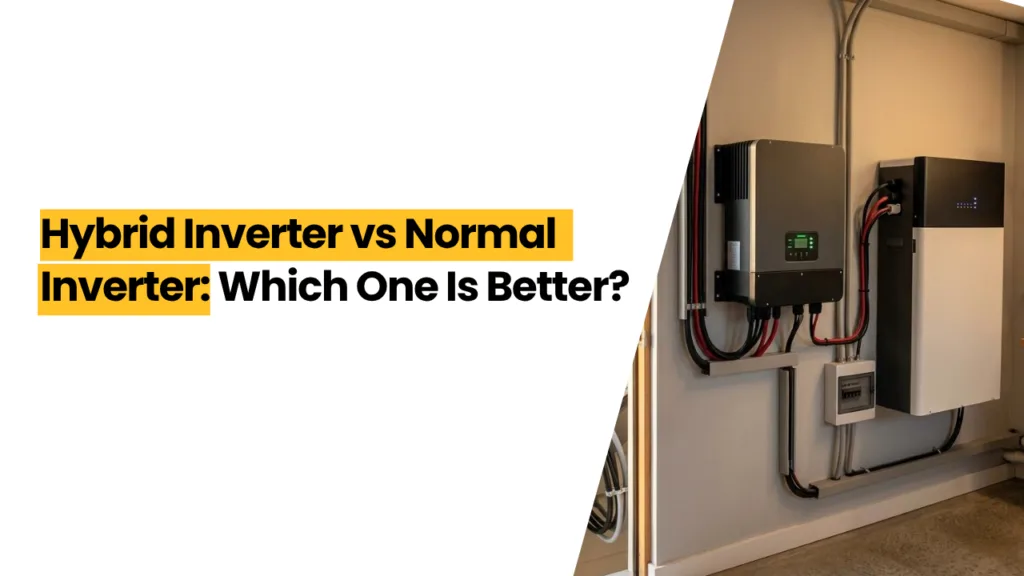
A hybrid inverter is better for homes that want solar, battery storage, and backup power in one system. A normal inverter can be the smarter choice for a simpler setup without batteries. The better option depends on your budget, electricity needs, backup expectations, and plans for future expansion.
What is a hybrid inverter?
A hybrid inverter coordinates solar panels, batteries, grid electricity, and household loads from one unit. It can send solar power to appliances, charge a battery with surplus energy, and use stored power later when production falls. A hybrid solar inverter can also coordinate charging more intelligently around household demand. For homes planning storage, this integrated approach keeps more of the energy system under one control point.
If you are wondering how a hybrid inverter works, think of it as the control point for a more connected home energy setup. It does more than convert electricity; it manages where available energy goes between solar generation, storage, the grid, and household demand.
How does a normal inverter work?
A normal inverter has a narrower job. A solar inverter is still a core part of any panel-based setup. This basic difference is often the starting point when comparing the two inverter types.
It converts DC electricity from solar panels into AC electricity that household appliances can use. That straightforward design can work very well when your needs are limited to solar generation.
The difference becomes clearer when batteries enter the picture. A conventional setup may need additional equipment for storage or backup, while an integrated design can keep more functions together.
What is the real difference between them?
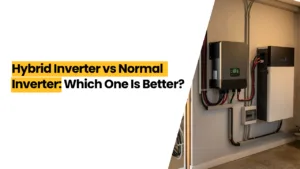
The main difference between the two systems is how they handle energy storage and energy management. A hybrid unit is built to coordinate solar and batteries, while a normal unit generally focuses on power conversion.
| Feature | Hybrid option | Normal option |
| Solar conversion | Yes | Yes |
| Battery management | Built in | Usually separate |
| Backup capability | Strong when designed correctly | May need extra equipment |
| Upfront cost | Usually higher | Usually lower |
| Future battery plans | Easier | Depends on model |
| Energy management | More advanced | Simpler |
| System layout | More integrated | More modular |
For a growing solar inverter system, integration can be valuable because battery coordination stays inside the core equipment. A hybrid solar inverter can make the overall setup cleaner when storage is part of the plan.
Which one is better during outages?
For backup power, a hybrid inverter generally has an advantage. When paired with a suitable battery and backup circuit, it can keep selected appliances operating after the grid fails.
However, the equipment label alone does not determine how well a backup system will perform. Battery capacity, load size, wiring, changeover arrangements, and installation quality determine what actually stays powered.
A normal inverter can still be part of a backup setup, but additional components may be required. If outages are frequent, ask for a complete backup design rather than choosing from inverter specifications alone.
Is the higher price worth it?
A hybrid model can justify its higher purchase price when battery storage, backup power, or future expansion matters. You are paying for flexibility and integrated control, not simply for a more expensive version of the same product.
The smartest purchase is the one that fits your actual electricity habits. A lower-priced normal solar inverter may make more sense when the goal is simply to convert solar electricity and keep the installation straightforward.
What does current storage data tell us?
Battery storage is moving quickly into mainstream energy planning. The International Energy Agency reports that 108 GW of new battery storage capacity was deployed worldwide in 2025, around 40% more than in 2024.
That growth does not mean every household needs batteries. It does show why storage-ready equipment deserves attention when planning a modern home energy system.
Which option fits different homes?
A hybrid solar setup makes sense for homeowners who want to combine solar generation with battery storage and backup. It is particularly useful when the system is expected to expand over time.
This type of system can be useful when battery storage is part of the plan, while a simpler solar inverter can suit a home that mainly wants to convert panel output into usable household electricity.
Use this quick guide:
- Battery plans: Choose hybrid when storage is part of the near-future plan.
- Backup needs: Choose an integrated setup when keeping essential loads running matters.
- Simple solar: Choose a conventional unit when storage is not needed.
- Future expansion: Consider hybrid technology if you expect your energy needs to grow.
How should you choose step by step?
- Measure your loads: Identify the appliances you use most and which ones must run during outages.
- Check solar capacity: Match the planned panels with an appropriately sized solar inverter.
- Decide on batteries: Work out whether storage is needed now, later, or not at all.
- Set the real budget: Compare equipment, installation, protection, batteries, and future solar inverter upgrade costs.
- Define backup: Decide whether you need lights and fans or heavier loads such as pumps and cooling.
- Check compatibility: Confirm battery chemistry, voltage ranges, communication requirements, and grid compatibility.
- Get a professional design: Have the complete solar and battery system checked by a qualified professional before purchasing equipment.
Which one should you choose?
If you want solar today and expect to add batteries or backup later, a hybrid inverter is usually the more flexible choice. It provides more room to expand without redesigning the entire energy setup.
If your needs are basic and your priority is keeping the installation straightforward, a normal inverter can still be an excellent choice. The smartest purchase is the one that fits your actual electricity habits.
FAQs
Is a hybrid inverter always better?
No. It is better when battery storage, backup, or future expansion matters. For a simple solar-only installation, a normal inverter can provide exactly what the homeowner needs.
Can I run air conditioning from battery backup?
Yes, if the battery, inverter, wiring, and backup circuit are sized for the air conditioner’s starting and running demand. Heavy appliances can reduce battery runtime quickly.
Do hybrid systems work without sunlight?
Yes. With sufficient battery charge, the system can supply stored energy when panels are not producing. The available runtime depends on battery capacity and household demand.
Are normal inverters cheaper to install?
They can be, particularly for straightforward solar-only systems. The final installed price still depends on capacity, wiring, protection, labor, equipment quality, and whether additional backup hardware is required.
How long does an inverter last?
Many quality units are designed for long service, but actual life varies with operating conditions, installation, maintenance, and product quality. Warranty terms are worth checking before purchase.
Can batteries be added to an existing system?
Sometimes they can, but compatibility depends on the inverter model and overall system architecture. Getting the setup assessed before buying batteries can prevent unnecessary replacement costs.
Could your solar plan be built around your real needs?
A good energy setup starts with the way your home actually uses electricity. A complete solar inverter system should reflect your loads and backup expectations.
MJM Solar can assess your loads, solar potential, backup expectations, and plans, then help you choose a system that fits your home. The goal is a practical setup without unnecessary extras.